A Historical Walk Through High Park
Most visitors at High Park have no idea they’re in John and Jemima Howard’s backyard. The park is Toronto’s largest, sprawling across 400 acres. Visitors can hike through forest so lush it would be easy to forget you were in the city if not for the distant hum of traffic. Attractions such as the High Park Zoo and the Grenadier Cafe draw people from all across Toronto, and historical sites, although significantly less popular, preserve the stories of the land. High Park has been a staple of the city for as long as anyone can remember, and its history has deep roots.
It’s 10 am on Sunday, October 20th. It’s the kind of morning that can’t be spent indoors; the kind of morning that has to be savored before the weather cools down. On the South side of the park, the sunlight streams in through the trees like a movie set, and the path is empty except for a few stray joggers and cyclists.
The first thing you’ll see on the trail is Colborne Lodge. Previously home to the founders of the park, it has been restored to resemble what it would have been 200 years ago and is open for tours three times a day. What was once the Howards’ coach house has been converted into a fully hands-on museum. A horseshoe formation of tables displays antique items from the time of the park’s founders. Visitors can examine old medicines, medical instruments, even a leech in a jar.
After a perilous journey from London, England, the Howards settled West of downtown Toronto in 1832. John, who was trained as an architect, built a four-room house. Later, he added additional rooms and a second floor. The house also held an embarrassing secret for the couple: a bathroom. In the 1860s, almost everyone had an outhouse and having a toilet in the house was considered unsanitary. However, both John and Jemima suffered from illnesses, and it was more convenient to have a bathroom in the house. To conceal their secret, John built a camouflage door that blended into the wallpaper. This bathroom also features the oldest surviving flushing toilet in Toronto.
In 1873, the Howards donated the park to the city of Toronto for public use, although they lived in the park until their deaths. The house was left abandoned, and many of their possessions were stolen. Eventually, it was renovated to resemble its original condition, and the coach house was converted into the museum. Despite its fascinating history, many visitors at High Park are completely oblivious to the museum. “A lot of people don't know we're here,” says tour guide Svenya Scherer. “One thing we hear quite a lot is, ‘I didn't know there was a museum here.’”
The Jamie Bell Adventure Playground down the road is packed. Children in Halloween costumes swing on the monkey bars and race down the slides. Abby Zhang is watching her 4-year-old twin daughters run around the park. She’s wearing a white fisherman sweater, with her jet-black hair is gathered in a no-nonsense ponytail. “We like to come for the family events,” she says. “We came today for the Halloween Howl, which is really a lot of fun.” But when it comes to the history of the park, Zhang is a little less knowledgeable. “I think I have heard of the Colborne Lodge, but I haven’t actually been there, and I don’t really know a ton about it. I come here at least once a week and like, I don’t think I’ve ever actually seen the building.” Despite its relative obscurity, Colborne Lodge is arguably the most interesting place in the park, and its history extends beyond the house.
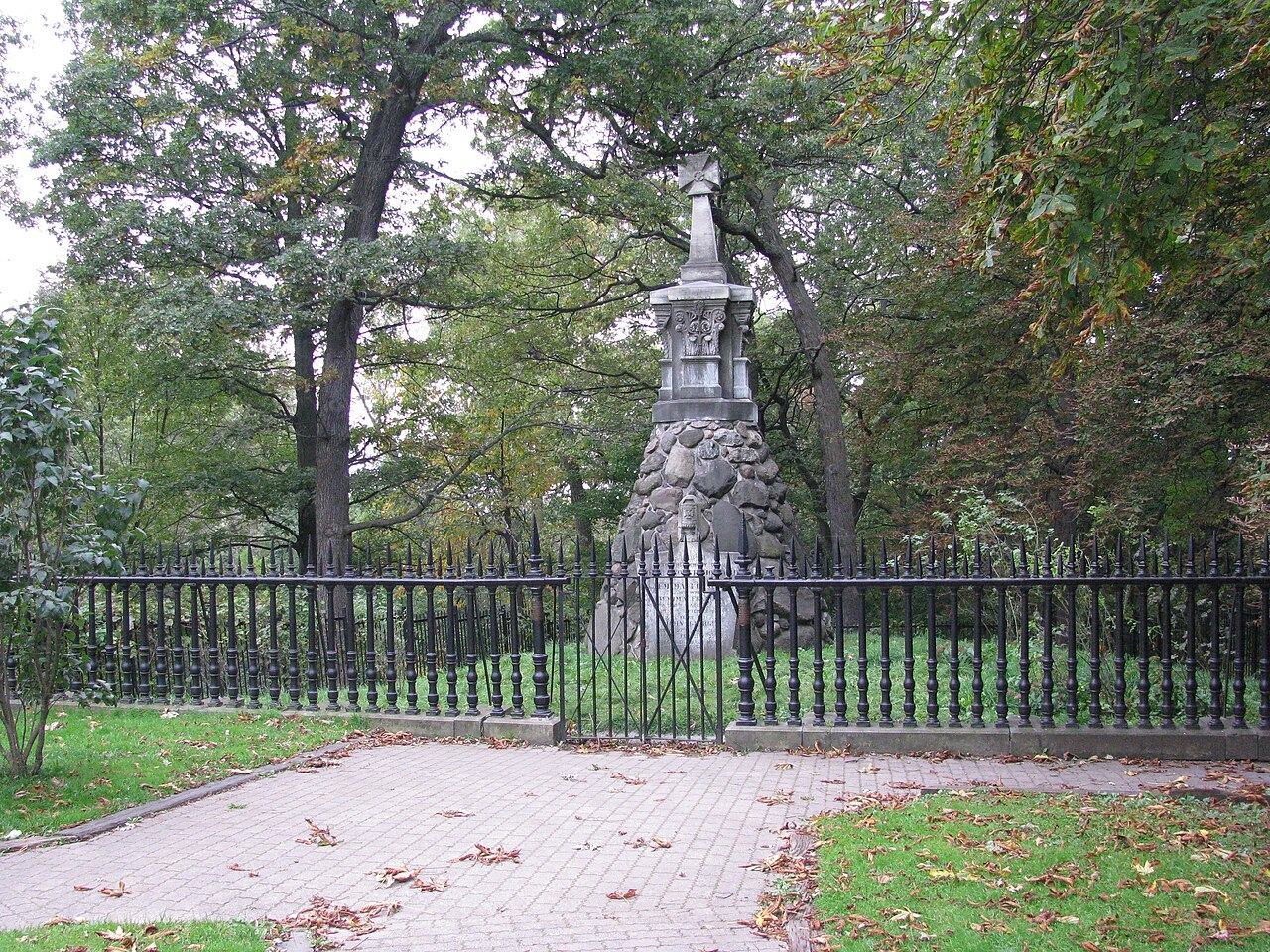
Across from Colborne Lodge is the Howards’ grave. As Jemima’s health deteriorated, John began to build their grave. From her bedroom window, Jemima would have seen the grave being constructed as she lay bedridden from breast cancer. Although it seems morbid, this most likely would have been a comfort to her; to know that she would be buried with her husband in the park she called home for decades.
The grave is an elaborate one. Because John was a freemason, it features a Maltese cross at the top, while the cairn pays homage to Jemima’s Scottish roots. Perhaps the most fascinating part of the grave is not the grave itself, but the fence surrounding it. In the 1870s, John found out that the fence surrounding St. Paul’s Cathedral in London was being torn down. He had it shipped to him, but the boat carrying it was wrecked on the rocks and sunk in the St. Lawrence River. Howard had what was left of the fence recovered from the wreck and repaired in Toronto. Now, it protects the grave where he and Jemima were laid to rest.
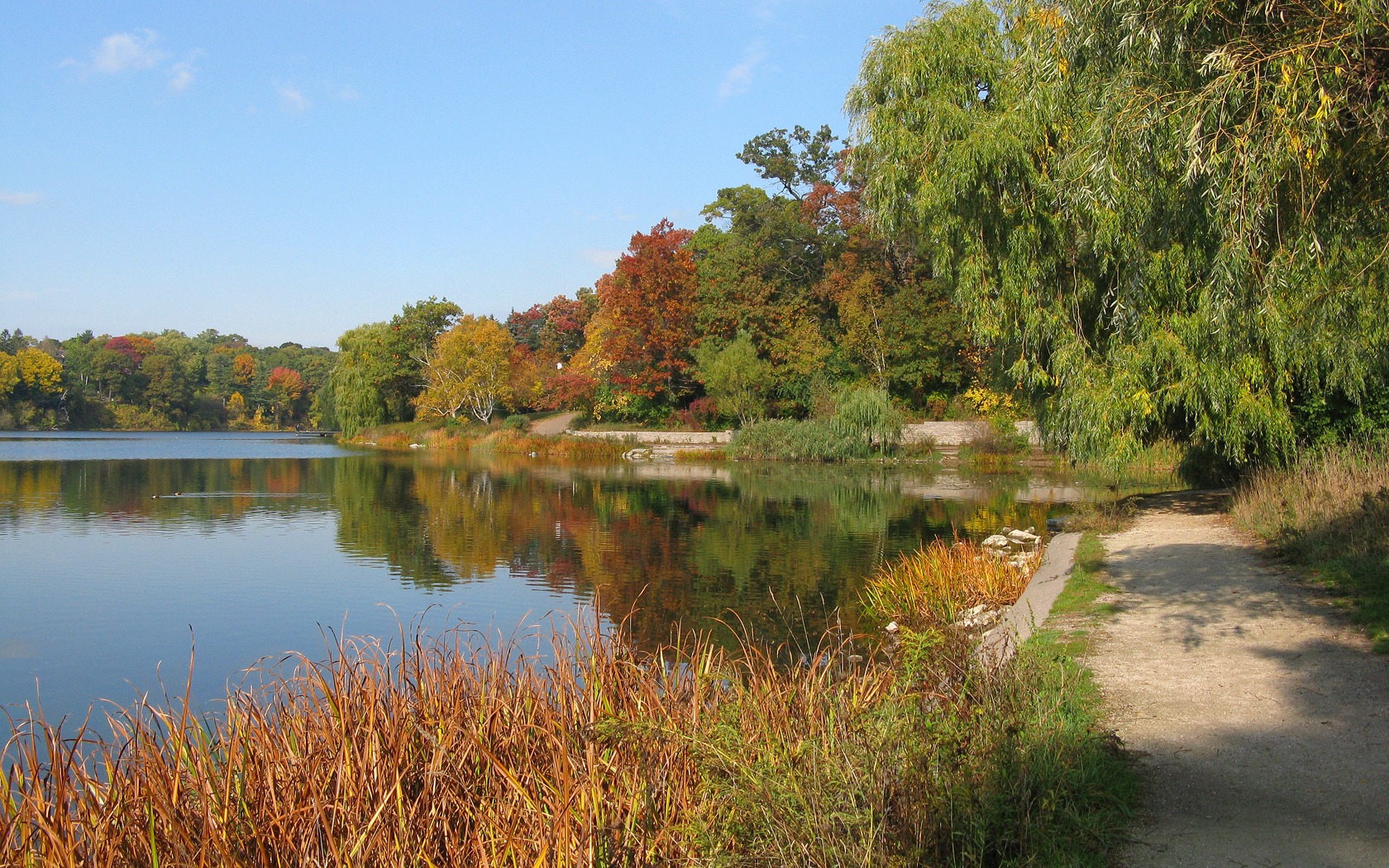
A little farther down the path is Grenadier Pond. Here you can find just about every kind of person: young women jogging, dog walkers, a couple sharing a muffin on a park bench, chatty women walking, a park worker planting bulbs. A man is metal detecting in the grass. He begins to dig, and when he finds nothing special, grumbles in disappointment. He leaves a golf course of holes. The pond is almost completely still, reflecting the trees and hills as perfectly as a mirror. At a picnic table by the water, where fishing is prohibited, two men sit preparing fishing lines. By now, the chilly air is beginning to warm, and the thin blanket of dew is quickly evaporating.
In 1993, work began to rehabilitate and naturalize the shoreline of the pond, after multiple field studies showed high phosphorus and nitrogen levels which promoted excessive algae growth. Concrete and grass were removed to restore the shoreline back to its natural state, and to discourage Canada geese, whose waste is harmful to the pond’s ecology. Although park goers often fed breadcrumbs to the wildlife, it was the massive amounts of bread being dumped into the pond that played a significant role in the increased population of Canada goose, and consequently, the poor health of the lake’s ecosystem.
In the 1996 summer edition of High Park: A Park Lover’s Quarterly, Gigi Suhanic wrote that “park staff regularly report bakery trucks pulling up to the comer of Ellis Avenue and the Queensway and dumping huge amounts of bread into the pond.” In fact, one particularly notorious bread-dumper was known among the park staff as “the bread man”. He arrived in a station wagon “loaded with bread in the back and on the roof, which he would dump in the ponds and on the lawns” writes Suhanic. He was asked to stop by park staff multiple times, but to no avail. After several attempts to stop the bread man, Harry Moffit, superintendent of High Park from 1959 to 1994, who reportedly never let his temper flare, angrily told him off. Suhanic says, “that was the last day anyone saw the 'bread man'.”
High Park contains so many fascinating histories. But are its many visitors aware of them? Alissa North, associate professor of landscape architecture at the University of Toronto would argue no, probably not. “It's basically that people sort of take parks for granted,” she says. “They don't realize how they came to be or who is even involved in setting them up, or maintaining them, or designing them, or any of that.” Over time, it’s natural for histories to be lost or replaced with more recent stories. But if we can dig a little deeper, what we find might surprise us. The stories are right in front of us, if we only look for them.
0 Comments Add a Comment?